Products
HAL-9001
Fixed-wing VTOL — our in-house flight testbed for the UVS Dynamics radio and vision stack; in build and ground test
Our own fixed-wing VTOL UAV, designed in-house and not for serial production. It is being brought up as the flight testbed for UVS Dynamics radio links and computer vision. As of today it is in build and ground testing and has not yet flown.
Not for serial production, and not yet flown. HAL-9001 is not a product — it is our in-house flight test rig, and it is still being brought up: the airframe is being built and reworked in-house, the autopilot is on the bench, and ground testing is where it stands today. Its job, once it flies, is to put the rest of our stack into the air — the UVS Link / UVS Link Pro radio links and UVS Vision computer vision — and validate them in real flight rather than only on a bench.
Airframe
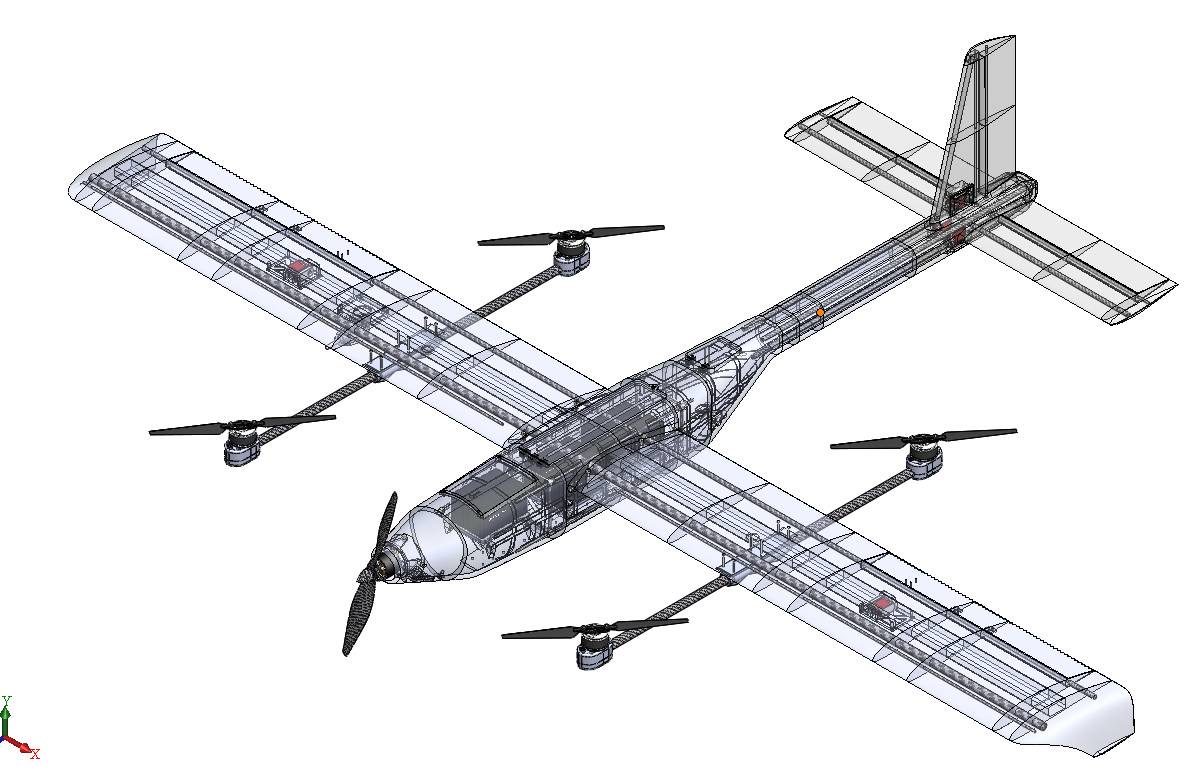
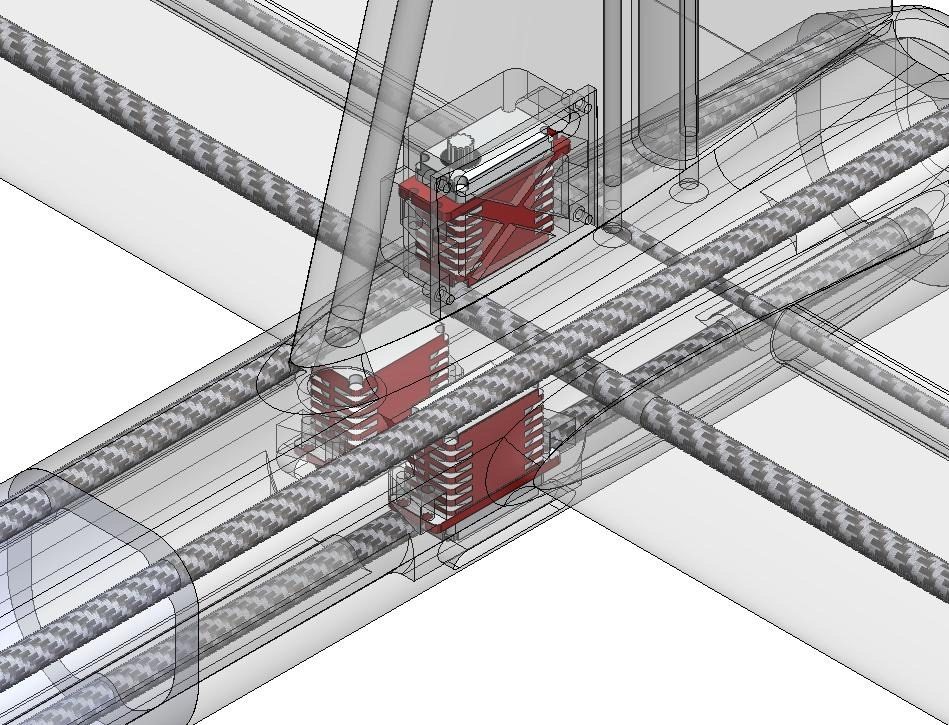
HAL-9001 is designed as a fixed-wing aircraft with vertical takeoff and landing: lift rotors take it off the ground and a tractor cruise propeller transitions it into forward flight — no runway, no catapult, minimal setup. The tail is conventional — horizontal stabiliser on the boom with a single fin above it.
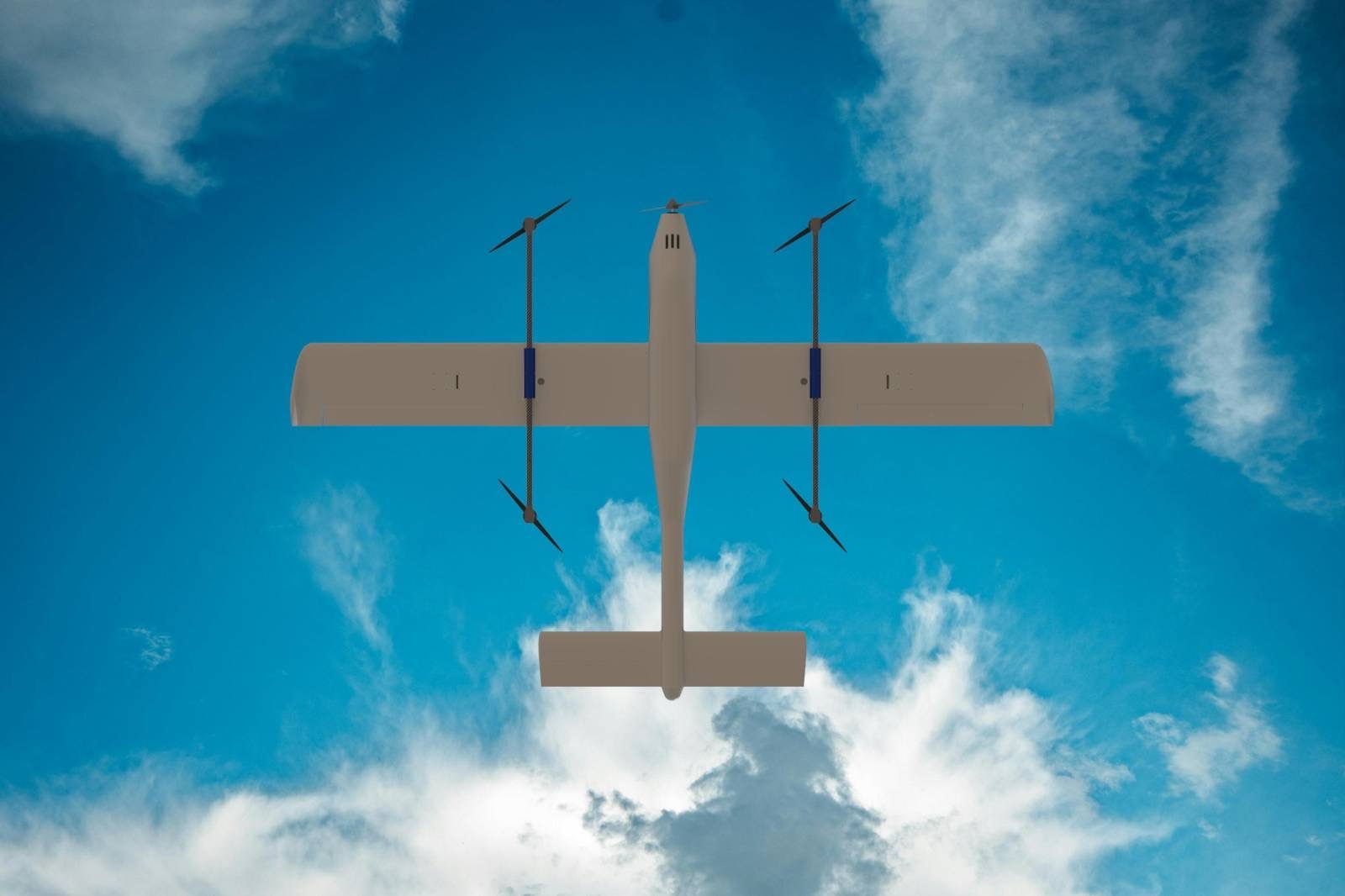
The fuselage and tail are one-piece; the wing is built from joining consoles. That buys fast iteration: changing the wing geometry or payload mounts touches only the affected console, not the whole aircraft.
HAL-9001 is the programme, not a single airframe. An earlier generation was built and tested; its lift margin proved too small for the payload we need it to carry, so the aircraft shown here is a new design with margin designed in from the start. Every image on this page is a render of that new airframe — we have no in-flight photography yet.
In August 2024 Ukraine’s Innovation Development Fund, which runs Brave1, reviewed HAL-9001 as innovation project 2727. It rated the project’s scientific and technical level as medium, on the basis of working mock-ups verified in laboratory conditions; concluded that the project may be considered promising for the needs of the Armed Forces of Ukraine; recommended bringing it to the experimental-prototype stage; and noted that the team then had no capacity for serial production. HAL-9001 has since been kept as an internal testbed, and the prototype stage is what we are working towards.
Why we keep it
Radio links, navigation systems, antennas — all of these have to be validated in real flight, not just on a bench with a channel emulator. A rented or third-party platform almost always involves a compromise: different antenna geometry, different payload mounting, different integration constraints. Our own aircraft is meant to remove that compromise — once it flies, we see how our systems actually behave in our conditions.
Where we’re taking it
The near-term goal is first flight. After that: deeper UVS Vision integration (GPS-denied navigation onboard) and the shortest possible “change the airframe → fly” loop. HAL-9001 deliberately stays an internal engineering tool that accelerates work on our primary products — not a product in its own right.
Engineering details
Features
- Vertical takeoff and landing — no runway, no catapult
- Multirotor VTOL lift + a tractor cruise propeller; conventional tail
- Wing built in joining consoles — fast iteration as integration needs change
- Designed to carry our UVS Link / UVS Link Pro radio links and UVS Vision computer vision — flight integration is the next step
- Provision for GPS-denied navigation (UVS Vision) and dual GNSS/INS
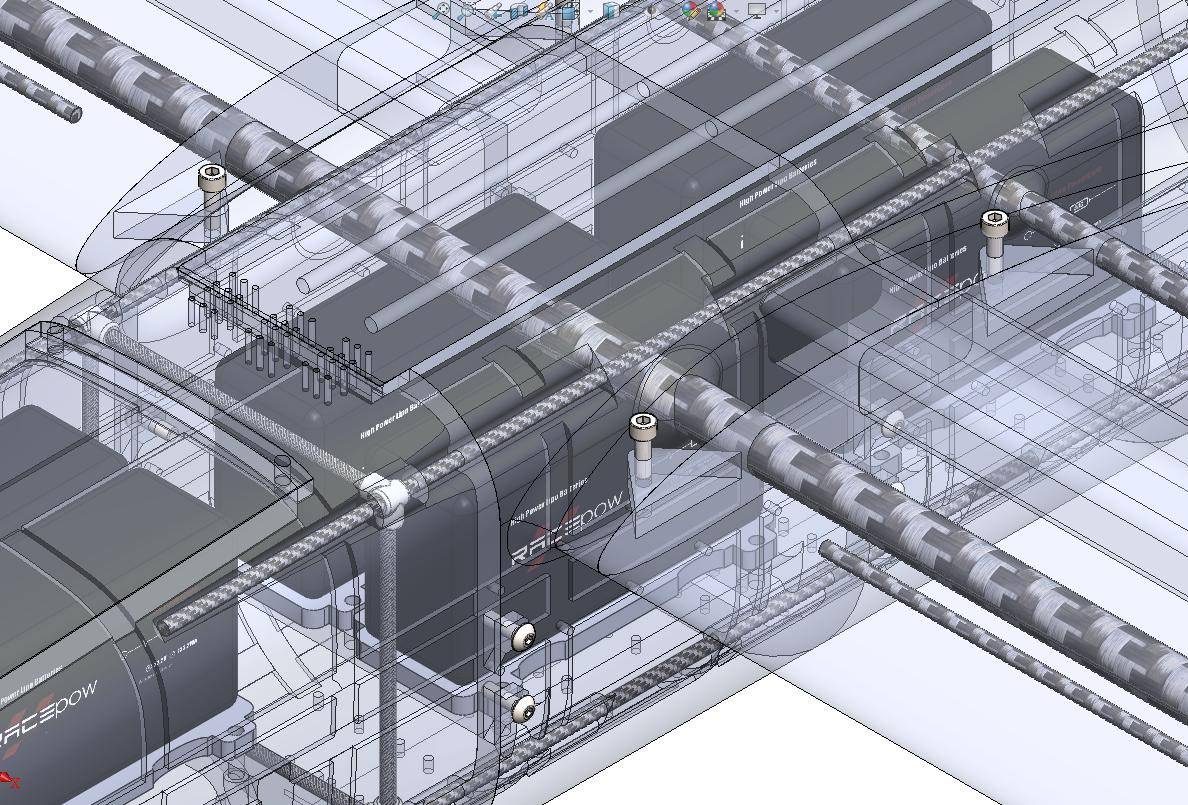
- Electric powertrain, high-capacity lithium battery